Aurion Mission

Friday, August 5, 2011

Timeline (One Small Step for a Socialist...)

World War II Edit World War II sectionEdit

1940s Edit 1940s sectionEdit

  • October: Werner von Braun and his colleagues were said to have discussed disappointment with the use of the V-2 as a weapon and the potential loss of the war by Germany. Someone later denounced them for their comments and, combined with Gestapo charges of Communist sympathies and sabotage, sealed his fate.
  • March 22, 1944: The unsuspecting von Braun was arrested and was taken to a Gestapo cell in Stettin, where he was imprisoned for two weeks without knowing the charges leveled against him.
  • POD: Unlike OTL, Walter Dornberger and Albert Speer were unable to convince Hitler that von Braun was needed for the V-2 rocket program. von Braun was held in Gestapo custody for a month, then ordered executed by Heinrich Himmler personally. His brother Magnus von Braun, also suspected, was sent to a labor camp in Poland, where he died of typhus in October 1944.
  • 1945: German scientists from the V-2 program are captured by the Russians. Though their aid in the Soviet rocket program isn't definitive, their technology, including several intact V-2 rockets greatly aid the Soviet scientists, including Sergei Korolyov.

Space Race Edit Space Race sectionEdit

1950s Edit 1950s sectionEdit

  • 1956: Pre-dating OTL's "Sputnik" by over a year, the Soviets launch an orbital satellite on July 4th, 1956 to the astonishment of the world.

    Just weeks earlier in the United States, the Army Ballistic Missile Agency under General Medaris is ordered to cease work on satellites, as the Defense Department grants sole research to the Navy's "Project: Vanguard".
  • 1957: In correlation with the International Geophysical Year, the Soviets launch "Sputnik-4", carrying a dog into orbit in July 1957 and later "Luna-1" which impacted on the Moon in October 1957. Khruschev boasts "The Moon is Red!"
In the United States, panic over the Soviet space program forces Eisenhower to push for an American satellite as quick as possible.
The US Navy's "Vanguard" rocket is given extra funding and manpower, but from May 1957 until June 1959, the rocket fails to reach orbit and failure after failure stalk the US satellite program. Programs by the Air Force and Army are re-started, but are woefully behind even "Vanguard".
  • 1958: CIA sources learn that the Soviets are initiating a manned space program, named "Vostok". Still years away from a successful satellite launch, the US initiates "Project: Hermes" and begins recruiting for seven astronauts. Meanwhile, the Soviets launch "Luna-3" which takes pictures of the far side of the Moon and launch a 2000 lbs. test vehicle with two dogs onboard and return them to Earth after a day in space.
  • July 25, 1959: "Vanguard-VI" achieves orbit, becoming the first American satellite.

1960s Edit 1960s sectionEdit

  • August 5, 1960: August 5th, Yuri Gagarin lifts off in his "Vostok" spacecraft becoming the first human being in space. America and the West are stunned, as just four months earlier the "Hermes Seven" astronauts were introduced to the public. Gagarin's flight is followed on October 15th, by the flight of Gherman Titov, who remains in orbit for 24 hours.
  • 1961: Valentina Tereshkova becomes the first woman in space onboard "Vostok-6". Meanwhile in the US, work on the Atlas rocket continues and the first "Hermes" test capsules are going through their man-ratings.
  • 1962: Khruschev happy with Korolyov's successes, agrees with Korolyov's view that the Soviet space program can "rest on their laurels" for a few years and spend time developing the "Soyuz" lunar-capable spacecraft and "Proton" rocket. (In OTL, Khruschev keeps insisting on new "space firsts", pushing Korolyov into the risky and useless "Voskhod" series).
  • 1963: John Glenn becomes the first American in space on February 9th, 1963. His flight is a simple sub-orbital and though cheered by Americans and the West, as well as decorated by President Kennedy, his flight is seen in many quarters as "sub-par" with the grandiose Soviet missions.
Later in October, Alan Shepard becomes the first American to orbit the Earth. Shepard receives a ticker tape parade through New York. He later leaves the space program in 1964 after being diagnosed with an inner ear disease and runs for and wins a U.S. Senate seat from California. He quits politics in 1992.
  • 1964: Soyuz test vehicles are launched on the new Proton rocket. Khruchev is removed from office, and new Soviet premier Leonid Brezhnev becomes impatient with Korolyov and asks when Soviets will return to space. Korolyov schedules an orbital flight in May 1964.
"Soyuz-1" is launched into orbit with Vladimir Komarov. Though encountering some problems with his control jets, he succeeds in docking with "Soyuz-2". Crew members are exchanged and both spacecraft return to Earth after a week in space.
  • 1965: The American "Gemini" program begins, but failures in the Titan rocket push the first manned launch to 1967. Meanwhile, the Soviets suffer their first disaster in space, as "Soyuz-4" disentegrates in orbit due to a failed heat shield in May 1965. Cosmonauts Patseyev, Bykovsky, and Rudenko are honored in a state funeral at the Kremlin.
Korolyov sinks into a depression, blaming himself over the deaths of the astronauts. For a few months, rival Vladimir Chelomei takes over the Soviet space program and seeking to establish a name for himself, pushes for a "lunar pass" mission (essentially a "free return trajectory" around the Moon with no orbit, "lunar pass" would be predecessor to a lunar orbit).
"LOK-5" launches on August 4th. Cosmonauts Pavel Belyayev and Yevgeni Khrunov circumnavigate the Moon and return to Earth safely. Unfortunately, before re-entry, a pressure valve accidentially opens, depressurizing the Soyuz cabin and killing the crew before they re-enter the atmosphere. A second state funeral occurs within months of the last.
  • POD: January 5th, 1966: Sergei Korolyov goes into surgery for hemorrhoids. Unlike OTL, his weakened heart (from years in a gulag) and the botched operation do NOT kill him. He convelesces for several weeks, but returns to health and his work in mid-1966.
  • 1967: Meanwhile, in the US, "Gemini-3" is launched on February 17th, with astronauts Gus Grissom and Ed White becoming the first American two-man mission. Efforts by the Americans seem hopeless in the face of Soviet progress, though the cosmonaut deaths in 1965 gave hope to the US program "catching up".
Three more Gemini missions are launched in 1967, with "Gemini-4" becoming the first American "space walk" with astronaut Roger Chaffee leaving the confines of his capsule for 30 minutes.
Over a year of re-design and the return of Korolyov help the Soviet program get back on schedule. In September 1967, a lunar orbital mission is launched and "LOK-Soyuz-9" orbits the Moon.
The lunar lander and the massive "N-1" rocket finish design and are scheduled for tests in 1968.
  • 1968: Final testing of the "N-1" lunar rocket is finished and "Soyuz-10" and "Soyuz-11" finish testing of the "LK" landing vehicle in Earth orbit by December 1968.
America has its first tragedy in space in March 1968 as the crew of "Gemini-8" (Charles Conrad, Jr. and Richard F. Gordon, Jr.) die as a result of a faulty thruster, causing them to pass out from excessive g-force. Their spacecraft remains active for almost two more weeks before the fuel cells run out. Conrad and Gordon's bodies are never recovered.
Gemini is put on hold for six months and discussion centers on whether to drop the program and move on to the "Helios Moon Program" spacecraft on the drawing board.
  • 1969: May 15th, "LOK/LK-12" orbits the Moon and its lander descends to less than 20 kilometers above the lunar surface.
Meanwhile the American program finally man-rates the "Helios-3" spacecraft with a 7 day mission by Neil Armstrong, Tom Stafford, and Rusty Schweickart.
  • July 20, 1969: Aleksei Arkhipovich Leonov steps off the ladder of "LK-13" onto the surface of the Ocean of Storms on the Moon. He proclaims "One small step for a socialist, one giant leap for the Revolution!". The Soviets have won the "Space Race".
Four months later, Vasili Lazarev lands on the Sea of Tranquility. Meanwhile at the same moment, "Helios-5" with James Lovell, Buzz Aldrin, and Michael Collins orbits overhead as America has its first lunar orbital mission.
Passing "LK/LOK-14" at a distance of less than 20 miles at one point, Lovell, Aldrin, and Collins look down at the second Soviet lunar landing. Press reaction in the United States and the West is depressing and filled with a sense of futility.
Over the next four years, the Soviets land 7 men on the Moon. Expansion of Soviet prestige allows for more countries to join in economic trade treaties with the USSR, boosting its economy. By 1975, the first "Salyut" space station is developed, and becomes a "refueling station" for expanded Soviet lunar missions. In 1979, "Lunagrad", a manned base is established with a dozen inhabitants. Svetlana Savitskaya joins the crew of "Lunagrad" in 1982, becoming the first woman on the Moon.
Continuing success and technological advances forestall the break-up of the Soviet Union. Economic booms in the CoMEcon (Council for Mutual Economic Assistance) countries dampen support for Solidarity in Poland and the Afghanistan War never emerges. When Mikhail Gorbachev becomes Secretary of the Party in 1984, he finds a Soviet bloc prosperous with only "minor" reforms necessary.
On March 5th, 1997, Leonid Kadeniuk, Vladimir Vasyutin, Boris Morukov and Mikhail Tyurin land on the Utopia Planetia region of Mars in "MK-Mars-1" and declare the "Red Planet is red!"
Meanwhile, despite being less than 6 months away from their first lunar orbital test of the "Lunar Excursion Module", the American moon program is shelved by President Nixon in January 1971. Failure to reach the Moon only highlights a growing sense of despondancy in the US (along with the disasterous Vietnam War). Nixon approves the "Skylab" Program, but won't entertain any further attempts at reaching the Moon.
American prestige continues to suffer into the 80s. Reagan's election in 1984 boosts patrotism in the US and his "commitment to the future of America in space" gives some hope for a resurgence in American space exploration with the creation of a "Space Shuttle" in the late 80s, as a replacement for the aging "Helios-II" capsules.

21st Century Edit 21st Century sectionEdit

Early 21st centuryEdit Early 21st century sectionEdit

January 1st, 2000: At precisely 1:00 AM, Gorbachev holds a speech which will go down in history as the beginning of the new era in Soviet Space Program: "Comrades, as you know we have landed on the Mars. I am here to announce our dedication to exploring this strange new world. We will go boldly where no human being has gone before!"
The rest of the speech included announcement of a bold new program: The Soviets have decided to establish a "Midway Space Station" in between Earth and Mars, which will serve as a refueling and resupplying future vessels traveling from Earth to Mars, and other way around. Gorbachev has announced that the station will be established by January 1st, 2010.

Lunagrad - Russians establishes the first permanent presence on the Moon at Lunagrad (Лунаг​рад), near the South Pole. 1987

Timeline (Oswaldia)

November 22, 1963Edit November 22, 1963 sectionEdit

John F. Kennedy is not assassinated in Dealey Plaza, but Governor John Connally is. An investigation yields inconclusive results, with Lee Harvey Oswald being killed by Jack Ruby shortly after his arrest.

1975Edit 1975 sectionEdit

Spacelab is re-christened Space Station Freedom, and external space-based radar dishes are affixed.
Secondary space stations were created for additional space monitoring of US military targets.

1977Edit 1977 sectionEdit

The USSR launches their own space stations in competition.

1978Edit 1978 sectionEdit

The US Legislature expands the range of the Air Force, allocated funding for the Interceptor program, an intercontinental bombing and reconnaissance craft.

1980Edit 1980 sectionEdit

US reconnaissance stations discover Russian construction of Okhotnik or Hunter ships, the USSR counterpart to the US's Interceptors.

1982Edit 1982 sectionEdit

The Interceptor Crisis nearly brings the world to annihilation.

1983Edit 1983 sectionEdit

The Space Treaty between the USSR and USA is signed in Paris, as a direct result of the tensions of the Interceptor Crisis.

1987Edit 1987 sectionEdit

Russians establishes the first permanent presence on the Moon at Lunagrad (Лунаг​рад), near the South Pole.
Photograph of Lunagrad taken in 1988
KOMEIAdded by KOMEI

1993Edit 1993 sectionEdit

The fifth US base is established near Tranquility Base, from the Apollo lunar landing. The other four bases are near the North Pole.

2003Edit 2003 sectionEdit

John F. Kennedy dies at the age of 86 in the Kennedy Compound at Hyannis Port, Massachusetts
John F Kennedy shortly before his death in 2003

Your face — and the Web — can tell everything about you

Your face — and the Web — can tell everything about you
NASA Spacecraft Data Suggest Water Flowing on Mars
08.04.11
 
An image combining orbital imagery with 3-D modeling shows flows that appear in spring and summer on a slope inside Mars' Newton crater An image combining orbital imagery with 3-D modeling shows flows that appear in spring and summer on a slope inside Mars' Newton crater. Image credit: NASA/JPL-Caltech/Univ. of Arizona
› Full image and caption
› Image gallery
› Related video

This series of images shows warm-season features that might be evidence of salty liquid water active on Mars today This series of images shows warm-season features that might be evidence of salty liquid water active on Mars today. Image credit: NASA/JPL-Caltech/Univ. of Arizona
› Full image and caption

This map of Mars shows relative locations of three types of findings related to salt or frozen water, plus a new type of finding that may be related to both salt and water This map of Mars shows relative locations of three types of findings related to salt or frozen water, plus a new type of finding that may be related to both salt and water. Image Credit: NASA/JPL-Caltech/ASU/UA/LANL/MSSS
› Full image and caption

PASADENA, Calif. -- Observations from NASA's Mars Reconnaissance Orbiter have revealed possible flowing water during the warmest months on Mars.
"NASA's Mars Exploration Program keeps bringing us closer to determining whether the Red Planet could harbor life in some form,” NASA Administrator Charles Bolden said, “and it reaffirms Mars as an important future destination for human exploration."
Dark, finger-like features appear and extend down some Martian slopes during late spring through summer, fade in winter, and return during the next spring. Repeated observations have tracked the seasonal changes in these recurring features on several steep slopes in the middle latitudes of Mars' southern hemisphere.
"The best explanation for these observations so far is the flow of briny water," said Alfred McEwen of the University of Arizona, Tucson. McEwen is the principal investigator for the orbiter's High Resolution Imaging Science Experiment (HiRISE) and lead author of a report about the recurring flows published in Thursday's edition of the journal Science.
Some aspects of the observations still puzzle researchers, but flows of liquid brine fit the features' characteristics better than alternate hypotheses. Saltiness lowers the freezing temperature of water. Sites with active flows get warm enough, even in the shallow subsurface, to sustain liquid water that is about as salty as Earth's oceans, while pure water would freeze at the observed temperatures.
"These dark lineations are different from other types of features on Martian slopes," said Mars Reconnaissance Orbiter Project Scientist Richard Zurek of NASA's Jet Propulsion Laboratory in Pasadena, Calif. "Repeated observations show they extend ever farther downhill with time during the warm season."
The features imaged are only about 0.5 to 5 yards or meters wide, with lengths up to hundreds of yards. The width is much narrower than previously reported gullies on Martian slopes. However, some of those locations display more than 1,000 individual flows. Also, while gullies are abundant on cold, pole-facing slopes, these dark flows are on warmer, equator-facing slopes.
The images show flows lengthen and darken on rocky equator-facing slopes from late spring to early fall. The seasonality, latitude distribution and brightness changes suggest a volatile material is involved, but there is no direct detection of one. The settings are too warm for carbon-dioxide frost and, at some sites, too cold for pure water. This suggests the action of brines, which have lower freezing points. Salt deposits over much of Mars indicate brines were abundant in Mars' past. These recent observations suggest brines still may form near the surface today in limited times and places.
When researchers checked flow-marked slopes with the orbiter's Compact Reconnaissance Imaging Spectrometer for Mars (CRISM), no sign of water appeared. The features may quickly dry on the surface or could be shallow subsurface flows.
"The flows are not dark because of being wet," McEwen said. "They are dark for some other reason."
A flow initiated by briny water could rearrange grains or change surface roughness in a way that darkens the appearance. How the features brighten again when temperatures drop is harder to explain.
"It's a mystery now, but I think it's a solvable mystery with further observations and laboratory experiments," McEwen said.
These results are the closest scientists have come to finding evidence of liquid water on the planet's surface today. Frozen water, however has been detected near the surface in many middle to high-latitude regions. Fresh-looking gullies suggest slope movements in geologically recent times, perhaps aided by water. Purported droplets of brine also appeared on struts of the Phoenix Mars Lander. If further study of the recurring dark flows supports evidence of brines, these could be the first known Martian locations with liquid water.
The Mars Reconnaissance Orbiter is managed by JPL for NASA's Science Mission Directorate in Washington. The University of Arizona's Lunar and Planetary Laboratory operates HiRISE. The camera was built by Ball Aerospace & Technologies Corp. in Boulder, Colo. Johns Hopkins University Applied Physics Laboratory in Laurel, Md., provided and operates CRISM. JPL is a division of the California Institute of Technology in Pasadena.
For more information about the Mars Reconnaissance Orbiter, visit: http://www.nasa.gov/mro and http://marsprogram.jpl.nasa.gov/mro/ .

---------------------

Oblique View of Warm Season Flows in Newton Crater

An image combining orbital imagery with 3-D modeling shows flows that appear in spring and summer on a slope inside Mars' Newton crater. Sequences of observations recording the seasonal changes at this site and a few others with similar flows might be evidence of salty liquid water active on Mars today. Evidence for that possible interpretation is presented in a report by McEwen et al. in the Aug. 5, 2011, edition of Science.

This image has been reprojected to show a view of a slope as it would be seen from a helicopter inside the crater, with a synthetic Mars-like sky. The source observation was made May 30, 2011, by the High Resolution Imaging Science Experiment (HiRISE) camera on NASA's Mars Reconnaissance Orbiter. Color has been enhanced. The season was summer at the location, 41.6 degrees south latitude, 202.3 degrees east longitude.

The flow features are narrow (one-half to five yards or meters wide), relatively dark markings on steep (25 to 40 degree) slopes at several southern hemisphere locations. Repeat imaging by HiRISE shows the features appear and incrementally grow during warm seasons and fade in cold seasons.

HiRISE is operated by the University of Arizona, Tucson, and the instrument was built by Ball Aerospace & Technologies Corp., Boulder, Colo. NASA's Jet Propulsion Laboratory, a division of the California Institute of Technology in Pasadena, manages the Mars Reconnaissance Orbiter for NASA's Science Mission Directorate, Washington. Lockheed Martin Space Systems, Denver, built the spacecraft.

Other imagery related to these new findings from the Mars Reconnaissance Orbiter is at http://www.nasa.gov/mission_pages/MRO/multimedia/gallery/gallery-index.html .

Wednesday, August 3, 2011

Aloha Mr.Prez Obama

Happy Birthday dear President.
Sincere wishes to move forward...
May the Divine be with u forever..
AurionMission.


Also check
http://obamamessiah.blogspot.com/

Mars convoy or building?


Opportunity Sol 1070 Courtesy - NASA.JPL Uniformly placed anomalies.

Crash or Coincidence?

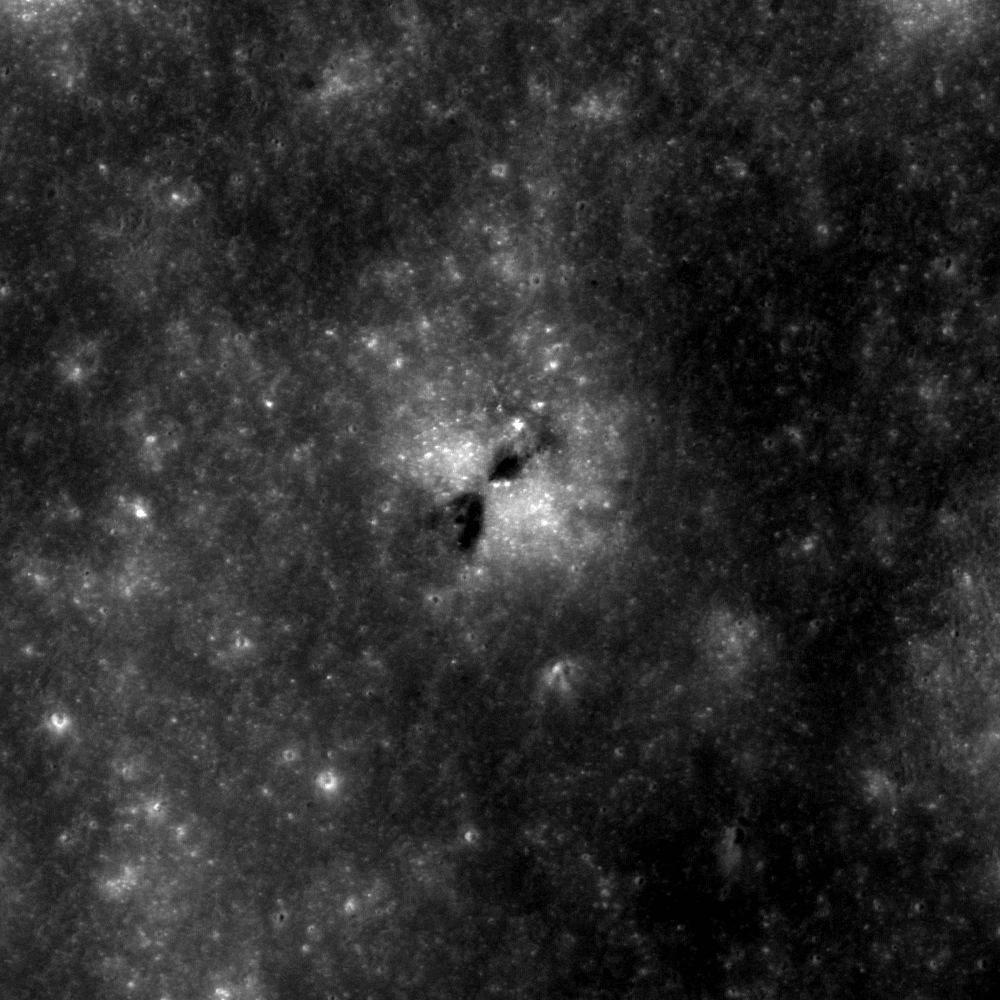
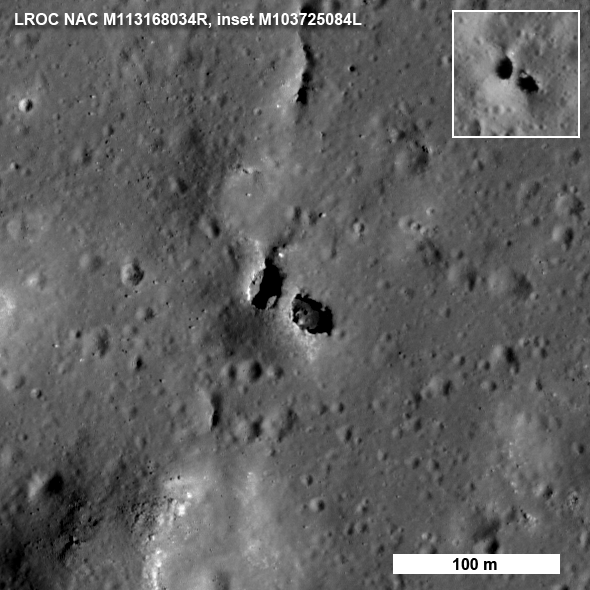
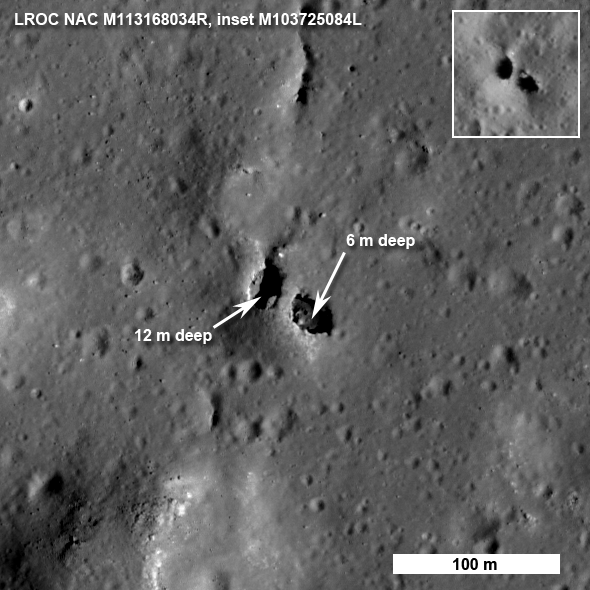
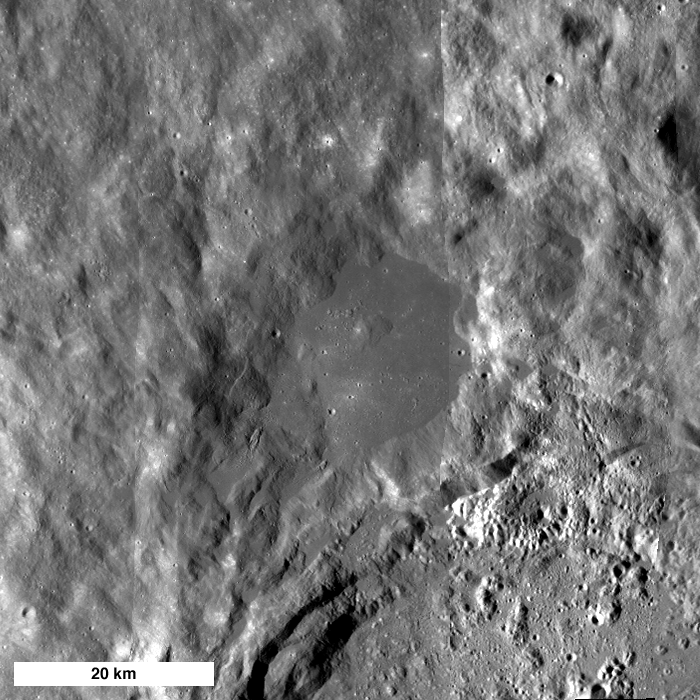
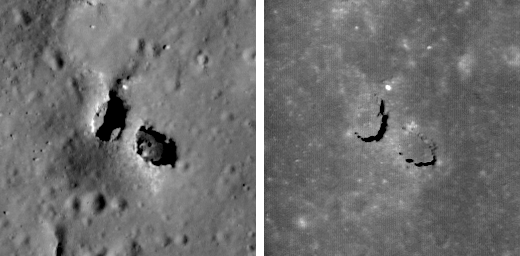
Natural Bridge on the Moon!

Natural Bridge on the Moon!

Featured Image

Asteriod Vesta by Dawn spacecraft


Dawn, as a mission belonging to NASA’s Discovery Program, delves into the unknown, drives new technology innovations, and achieves what's never been attempted before. In Dawn’s case, it is orbiting  one member of the main asteroid belt, Vesta, before heading to gather yet more data at a second, Ceres.
Dawn's goal is to characterize the conditions and processes of the solar system's earliest epoch by investigating in detail two of the largest protoplanets remaining intact since their formations. Ceres and Vesta reside in the extensive zone between Mars and Jupiter together with many other smaller bodies, called the asteroid belt. Each has followed a very different evolutionary path constrained by the diversity of processes that operated during the first few million years of solar system evolution.

Tuesday, July 26, 2011


The Blue Pearl
a.k.a. Blue Dot, Blue Sphere, Blue Disk, Blue Angel, Blue Flash, Blue Trails
… the Blue Pearl [is] the subtlest covering of the individual soul....
When we see this tiny blue light in meditation,
we should understand that we are seeing the form of the inner Self.
To experience this is the goal of human life.
[The Blue Pearl] is tiny, but it contains all the different planes of existence.
- Swami Muktananda (1)

Several years ago in a cosmology class we were discussing the subject of lights in the head. Seeing light in the head is not new to meditators or people who are clairvoyant. People report seeing white lights and some report seeing blue lights. I’m in the group that sees the blue lights!
Once I could name the experience of seeing the blue light, I started to notice when it came. It would come of its own accord. One doesn't invoke it. The blue sphere appears both in my head and with my eyes open. Sometimes it will come when I’m meditating or working in a group situation like a healing gathering. Other times it will flash in my consciousness or field of vision for no seemingly apparent reason. One never knows when the Blue Dot will come or whether it will appear to be inside or outside the head.
Now that I’ve been working with it for some cycles, I see the Blue Dot as an affirmation of a truth and that something spiritually significant has happened, or that I’m on target with my thinking.
A few times when the Blue Dot has come up in conversation, I’ve discovered that other people also see it. Once when I was meditating about a person’s new business enterprise, the Blue Dot flashed. I thought it was a wonderful sign that she was blessed in her venture. When I told her about my experience, I learned that she too sees the blue sphere and has come to call it the Blue Angel.
The first place I discovered any in-depth discussion of the Blue Pearl is in the Siddha Yoga literature. Swami Muktananda (1908–1982), the great Indian saint who introduced Siddha Yoga practices and meditation techniques to the United Sates, gives a detailed description of the significance and of his experiences of the Blue Pearl. At one point he described how it expanded in front of him, engulfed him and carried him to other worlds. He was very clear that it was a good thing and a sign of awakened Kundalini. Muktananda referred to the Blue Pearl as a physical manifestation of the soul. He said that seeing it in meditation is like seeing the soul.

"Death" is simply the name we give to the
departure of the Blue Pearl from the body.
(2)
In his book Does Death Really Exist? Muktananda says,
The blue dot, which we call the Blue Pearl, dwells in the sahasrara, the spiritual center in the crown of the head. It is the body of the Self. All consciousness is contained in it. All of the dynamism of the breathing process comes from the Blue Pearl. When that light enters the body, the rhythm of breathing begins. When it departs from the body, consciousness departs from the bloodstream, the nerves and the lungs, leaving everything limp and lifeless. "Death" is simply the name we give to the departure of the Blue Pearl from the body. (2)
The book goes on to say that one can see the Blue Dot leave the body at death, and where it exits, according to scriptures, indicates the state of the person's experience. If the soul leaves through the eyes, one has been very virtuous.
The Tibetan master Djwhal Khul, speaking through Alice A. Bailey’s volumes on the ageless wisdom teachings, also makes reference to the “Blue Disk” in four specific places ~ each time in the context of a meditation visualization exercise.
Within the darkness of the soul, prisoned within the form, a point of light is seen. Then there arises, all around that point, a field of deepest blue and this becomes irradiated by the soul, the inner sun, shining within a brilliant field of blue. The points of light become the many lines or rays of light; these lines then merge and blend until the lighted Way appears. One is the light, the light upon the Way. One is the Way and always walks thereon. (3)         
D.K. tells us about the point of dark blue, or a small indigo disk, which appears: “This is, in reality, the exit in the head through which the soul passes out of the world of phenomenal existence, and it is the symbol of the path or the door into the kingdom of God.“ (4)
Celebrated thirteenth century Indian Mystic-Poet-Yogi Jnaneshwar Maharaj (1271–1293) says the Blue Color is a great and holy pilgrimage center. "This radiant and scintillating and sublime Blue Color can be seen directly in meditation. If we want to see such a great and wonderful thing, our way of life and our habits must be the purest and the most holy. Then only we become worthy of it. Our association, our words, and our thoughts should be full of God. He who has seen the Blue Color is the most blessed of all human beings."


Carl Sagan refers to the earth as the Pale Blue Dot in his book of the same name. From space, astronauts are awed by the sight of the earth, a blue pearl hovering against the blackness of the universe.
When you look at the Earth from space it looks like a beautiful blue dot, which is rather interesting if you consider the correlation of the Blue Pearl representing the Self and the Earth also.


Since we put up the Blue Pearl pages in March 2004, we’ve received lots of emails from people all over the world who have seen and experienced some form of lights around them. Whether they are in your head or seen floating above or around you, or come at a significant time in your experience, what we’ve learned is that seeing these lights is a phenomenon shared by many. As a result of these emails, we’ve been inspired to further investigate the Blue Dot. It’s amazing how influential blue is in our world!
- Blue Dottie

Sirius, The God*Dog Star
The effect of Sirian energy and influences generated approximately 17 years ago, in 1993 / 1994 (the last cycle when Sirius A and B were closest), have created renewed interest in this most influential heavenly body. The history books and religions of the world have had much to say about the God / Dog star. This article reflects on our ancestors' beliefs and inspired insights into a great mystery ~ the mystery of the Dog Star and its influences on our little corner of the universe.
http://www.souledout.org/cosmology/sirius/siriusgodstar.html
Sirius was an object of wonder and veneration to all ancient peoples throughout human history. In the ancient Vedas this star was known as the Chieftain's star; in other Hindu writings, it is referred to as Sukra, the Rain God, or Rain Star. The Dog Star is also described as "he who awakens the gods of the air, and summons them to their office of bringing the rain."
By the ancient Egyptians, Sirius was revered as the Nile Star, or Star of Isis. Its annual appearance just before dawn at the June 21 solstice, heralded the coming rise of the Nile, upon which Egyptian agriculture depended. This particular helical rising is referred to in many temple inscriptions, wherein the star is known as the Divine Sepat, identified as the soul of Isis.
For example, in the temple of Isis-Hathor at Dedendrah, Egypt, appears the inscription, "Her majesty Isis shines into the temple on New Year's Day, and she mingles her light with that of her father on the horizon." The Arabic word Al Shi'ra resembles the Greek, Roman, and Egyptian names suggesting a common origin in Sanskrit, in which the name Surya, the Sun God, simply means the "shining one."
For up to 35 days before and 35 days after our sun conjuncts the star Sirius ~ close to July 4 ~ it is hidden by the sun’s glare. The ancient Egyptians refused to bury their dead during the 70 days Sirius was hidden from view because it was believed Sirius was the doorway to the afterlife, and the doorway was thought to be closed during this yearly period.
In mythology the dog Sirius is one of the watchmen of the Heavens, fixed in one place at the bridge of the Milky Way, keeping guard over the abyss into incarnation. Its namesake the Dog Star is a symbol of power, will and steadfastness of purpose, exemplifying the initiate who has succeeded in bridging the lower and higher consciousness.
Located just below the Dog Star is the constellation called Argo, the Ship. Astrologically this region in the sky has been known as the River of Stars, gateway to the ocean of higher consciousness.
The Chinese recognized this area as the bridge between heaven and hell ~ the bridge of the gatherer, the judge. In the higher mind are gathered the results of the experiences of the personality.
Between each life the Soul judges its past progress, and also the conditions needed to aid its future growth. As long as it is attached to desire, sensation, and needs experiences, the Soul continues to come into incarnation. Until it is perfected, the Soul cannot pass over, or through, the Bridge.
The association of Sirius as a celestial dog has been consistent throughout the classical world; even in remote China, the star was identified as a heavenly wolf. In ancient Chaldea (present day Iraq) the star was known as the "Dog Star that Leads," or it was called the "Star of the Dog." In Assyria, it was said to be the "Dog of the Sun." In still older Akkadia, it was named the "Dog Star of the Sun."
In Greek times Aratus referred to Canis Major as the guard dog of Orion, following on the heels of its master and standing on its hind legs with alpha star Sirius carried in its jaws. The concept of the mind slaying the real can be seen in the tales which relate the dog as the hunter and killer ~ the hound from hell.
Manilius called Canis Major the "dog with the blazing face." Also called the Large Dog, Sirius appears to cross the sky in pursuit of the Hare, represented by the constellation Lepus under Orion's feet.
Mythologists such as Eratosthenes said that the constellation represents Laelaps, a dog so swift that no prey could escape it. Laelaps had a long list of owners. One story says it is the dog given by Zeus to Europa, whose son Minos, King of Crete, passed it on to Procris, daughter of Cephalus. The dog was presented to Procris along with a javelin that could never miss. Ironically, Cephalus accidentally killed her while out hunting with Laelaps.
Cephalus inherited the dog and took it with him to Thebes, north of Athens, where a vicious fox was ravaging the countryside. The fox was so swift that it was destined never to be caught ~ yet Laelaps the hound was destined to catch whatever it pursued.
Off they went, almost faster than the eye could follow, the inescapable dog in pursuit of the uncatchable fox. At one moment the dog would seem to have its prey within grasp, but could only close its jaws on thin air as the fox raced ahead of it again. There could be no resolution of such a paradox, so Zeus turned them both to stone and placed the dog in the sky without the fox.
In the Chinese tradition, there is a remarkable analogy in the double meaning of the word Spirit and the word Sing (star). Shin and Sing, the Chinese words for soul and essence, are often interchangeable, as they are in the English language.
It is said that the fixed stars, and their domain, contain the essences or souls of matter ... a living soul is a higher essence of matter, and when evolved may also be called a star. These stars and essences become gods.
Like souls, stars are regarded as having divine attributes. Stars look down from regions of chaotic, violent, purity onto the world of humanity and influence the energies of humankind invisibly, yet most powerfully.

In June of 1993, as our sun covered Sirius from the Earth's view, the largest flood of the past century occurred. The waters of the Mississippi, our Nile River, overflowed its banks. The flood that year continued until the middle of August. When Sirius re-appeared from behind the sun, the flood waters receded and the immediate life-threatening crisis subsided. Could this have been a reflection of the great rivers of energies streaming out from Sirius?
Our Spiritual Sun~SiriusMore esoteric sharing on Sirius
A Leonid Meteor shower around the constellation Canis Major, the big dog, shows the trail of a spectacular fireball meteor appearing to leap from the constellation's brightest star Sirius, near the top right. Photo by Wally Pacholka
 http://www.souledout.org/cosmology/cossynthreflects/sirius.html
Brilliantly blazing, the star Sirius, brightest beacon in our night sky, beckons with glimpses of grandeur unimaginable. Small wonder this star was granted God / Goddess status amongst many early peoples, including the Egyptians and Sumerians. As modern astronomy unlocks our starry neighbors' secrets, evidence unfolds of the appropriateness of naming this star God.
As we learn more about the nature of our galaxy and especially its magnetic field, we know that streams of energy from stars travel in specific directions, either up or down the galactic arm in which they are embedded. Stars are polarized to other stars, either negative and positive, some receiving energy, some sending it out, all of which travels on the path of the magnetic field lines.
Recent findings reveal we are "downstream" from Sirius in the part of the galactic arm our solar system resides in. If God is the bringer of life (energy) and light, Sirius fits the description ~ it transmits its energy (highly charged particles) to our entire system via the magnetic field lines. We literally receive energy from Sirius! Did the ancient priests understand this process, thus naming this star "God"?
Now our sun obviously deserves the title of "light bearer" and "life bringer," as no life could exist in the solar system without its sustaining rays. But even the majestic sun pales in comparison to the nearby Sirian star system. We know of two stars there, and perhaps a third, although this remains unverified (see Sirius ~ A Triple Star System). The largest, the one we see as the brightest star in all the heavens, is Sirius A, outshining our sun 10 times over with only the mass of three suns. Sirius B, a white dwarf star invisible to the naked eye, packs almost the entire mass of our sun into a globe only four times as large as the Earth.
White dwarf stars are extremely dense ~ in fact, Sirius B's surface is 300 times harder than diamonds, while its interior has a density 3000 times that of diamonds. Spinning on its axis about 23 times a minute, it generates huge magnetic fields around it. The two stars dance around each other, constantly exchanging particles. Because of its greater density and magnetic field, Sirius B takes the lion's share, actually vampirizing gases and materials off of its larger host body, Sirius A. Clearly a spectacular star system giving off enormous amounts of energy, our sun appears puny and insignificant in comparison.
Even during normal phases of its life, a tremendous amount of electrical energy is created on Sirius, making it the most energized, "positive" point in our little corner of space. Now this might seem like nothing more than a minor curiosity, but these are not ordinary times. Every 49.9 years, the two stars in the system, Sirius A and B, come as close together as their orbits allow, creating huge magnetic storms between them. As they approach each other, the stars both begin to spin faster as tidal forces become stronger, finally flip-flopping over, actually trading places with each other. Imagine a gigantic electrical turbine engine twisting and spinning, generating billions and billions of volts of electricity. This energy is eventually released to flow down the magnetic field lines to the sun, which transmits it like a lens to all the planets.
What does this mean to life on Earth? The previous time it occurred, in 1944, humanity was locked in the greatest conflict ever seen in history, World War II. It happened most recently almost 50 years later, in June, 1993.
The Tibetan master Djwhal Khul, author of the Alice Bailey books, taught in the early 20th century about the effects of the Sirian system on our world. When asked what forces were responsible for the world crisis during World War II, he listed as the number one cause "a welling up of magnetic force on Sirius, which produces effects upon our solar system and particularly upon our Earth." He proclaimed the Sirian energies stimulated both the best and the worst in humanity, as depicted in the global conflict. Does this man share the same insights as the ancient priests of Egypt and Sumeria?
The concept of Sirius playing a God-like role to our world is not a new one. The Dogon, the African tribe who have worshipped the invisible star Sirius B for thousands of years, claim visitations from beings of the Sirian system. In their religious dogma, they acknowledge the star as "immensely heavy, invisible, very small, yet extremely powerful." Their understanding of the two stars' orbits coincides exactly with modern astronomical findings, yet was arrived at thousands of years before the equipment needed for such measurements even existed. Their ability to recognize the awesome power of Sirius B, a star that can't even be seen, is truly remarkable. (For further reading on this subject, try Robert Temple's The Sirius Mystery.)
Sirius, considered by the ancient Egyptians to be the most important star in the sky, was astronomically the foundation of their entire religious system. Its celestial movements determined the Egyptian calendar ... Sirius's heliacal rising (when Sirius again rose into visibility after being hidden by the sun's light for 70 days) marked the beginning of the Egyptian year and roughly coincided with the flooding of the Nile ~ major events marked by feasting and celebration.
In the Sumerian civilization, predating the Egyptians, their epic poem Epic of Gilgamesh describes a dream of Gilgamesh where the hero is drawn irresistibly to a "heavy star" that cannot be lifted despite immense effort. This star descends from heaven to him and is described as having a very "potent essence" and being the "God of heaven." Gilgamesh had, for his companions, 50 oarsmen in the great ship Argo (this constellation borders Canis Major, where Sirius is found). These elements comprise almost a complete description of Sirius B: a super-heavy gravitationally powerful star made of concentrated super-dense matter (essence) with the number 50 associated with it (describing its orbital period).

Earth Changes
What will occur when our solar system receives more electrical energy than usual? Let's pretend the Earth is a spinning top and see what happens when an electrical current or "wind" moves across it. Naturally, the top speeds up ~ modern science verifies the speed of the Earth's rotation varies with an all-time high speed of 19 hour days being recorded in rocks 3.5 million years ago. That's alarmingly fast. What happens to a sphere that spins faster? The poles begin to flatten while the middle bulges out at the equator. This action stretches the oceans causing submerged land masses to rise above sea level.
Spinning also causes an extreme wobble of the Earth's axis to occur, with the globe sometimes actually falling over onto its side. Scientists know this has happened to the Earth at least nine times when it hast tilted up to 51 degrees (our axial tilt now is at 23 degrees). When this occurs, the land at the equator moves up to where the north pole is now, which explains why Alaska has fossils of alligators. Each time the Earth speeds up, it must slow down again due to the drag from the Moon, bringing about additional geophysical upheaval.
Djwhal Khul further notes that certain basic changes in the orientation of the Earth's axis are now taking place ... and periods of upheaval, confusion and cataclysm always precede these great shifts in the planet's axis. He also divulges the planet is in process of taking an initiation, marked by the great event of an axis shift as the Earth literally "repolarises" itself. His prediction of "increased earthquake and volcanic activity during the last decade of the millennium" has been confirmed by world seismologists today.
Seismic activity has indeed picked up dramatically in the last three to four years. California scientists state "more earthquakes are now seen in specific areas (L.A., for instance) than ever previously recorded." Many volcanic eruptions have also occurred in this same time period with Mt. St. Helens leading the fray with its 1988 eruption, Mt. Fuji's recent expulsions and of course, Mt. Penatubo's contribution.

Liberation
Sirius is also associated with liberation; in fact, according to ancient teachings, the very concept of freedom itself resides in human consciousness because of the influence of this star system. Interestingly enough, the time each year our sun conjuncts Sirius at 14 degrees Cancer is close to July 4, America's Independence Day. Bastille Day, the French equivalent of Independence Day is July 14, and Canada celebrates its independence from England on July 1; Dominion Day. Venezuela's Independence Day is observed July 5, while Argentina's is celebrated on July 9. And noting, Iraq's Freedom Day, when the new Coalition government took control, happened on June 28, 2004 (two days earlier than it had been announced).
In 1993–1994, as the "great conjunction" of Sirius A and B approached, a wave of freedom swept our world culminating in the breakdown of the communist rule in Europe and the liberation of the Russian people from the hard-line Communist party. The Berlin Wall fell as the cold war ended ... these events transpired simultaneously with the magnetic forces building to their highest intensity on Sirius. Is there a connection? Perhaps.
Conditions on our world may not become as dramatic as previously described; nevertheless, certain major adjustments are likely to occur. Aurorae may be everywhere as the incoming particles bombard our atmosphere. So much additional electrical current may be moving through our own geomagnetic field, touching anything may result in large electrical shocks. Medical research shows increased emotional and mental imbalances during magnetic storms on Earth created by solar flare activity on the sun. (See Robert Becker's Cross Currents.)
Because the sun is likely to speed up its rotational spin as well, its magnetic field will enlarge leading to heightened sunspot activity which in turn creates large solar flares, affecting world weather patterns and probably all phases of life on Earth. We no longer have the protection of the Van Allen belt (part of the Earth's magnetic field) like we used to. For the first time in history, we'll receive Sirian energies without its deflecting mechanism.


Whatever the future holds for us, it feels safe to venture that great change is imminent for our world and civilization. Those looking for peace and security may have a difficult time finding it, externally, at least. Look within for that unfailing point of balance and stability. It has never felt like a finer time to realign with spirit, soul, higher self ... in that pinnacle of peace, comfort lies.
A new picture of the universe is emerging, one of a vast cosmic interdependence and connectedness. From first cosmos to last electron, the whole universe is a complex of coils within coils, spirals within spirals, magnetic fields within magnetic fields. The stars are interconnected to each other, exchanging particles and gases constantly, all flowing down the magnetic field lines or arteries of the galactic body. Scientists now feel it’s very likely the galaxy's coiled field lines diverge into intergalactic space where they may ultimately be connected to other galaxies. Are these tendrils of energy the nervous system of the galaxy, relaying information from star to star, galaxy to galaxy, on and on? One can only wonder.
- Denise St. Denis

Conjuntion with our spiritual sun

Every year on July 4, from our earth's position, our sun conjuncts the star Sirius. Sirius is associated with liberation. According to ancient teachings, the very concept of freedom itself resides in human consciousness because of the influence of this star system. Interestingly enough, our sun conjuncts Sirius, at 14 degrees Cancer, at July 4, America's Independence Day! And Bastille Day, the French Independence Day, is July 14.
As the most recent "great conjunction" of Sirius A and B occurred around 1993, a wave of freedom was sweeping our world that culminated in the breakdown of the communist rule in Europe and the liberation of the Russian people from the hard-line Communist party. The Berlin Wall fell as the cold war finally ended ... these events transpired simultaneously with the magnetic forces building to their highest intensity on Sirius. Is there a connection? Perhaps.
http://www.souledout.org/cosmology/highlights/siriushighlights/siriusheavenlyhost.html
Heliacal Rising of Sirius
The conjunction of Sirius and the Sun does not occur at the same time in all latitudes, and is not constant in the same region for a long period, hence the variation in calendars regarding the limits of the Dog Days. Some say the period of the dog days lasts 20 days before and after the conjunction of Sirius and the Sun.
In 2011 in the Pacific Time Zone, Sirius rises before the Sun on the last day of July, but remains hidden in its glare. When Sirius rises above the eastern horizon at an altitude of 7 degrees it can be seen. This heliacal rising of Sirius occurs August 7, 2011 in San Francisco.
... the heliacal rising: the first visible, though brief, appearance of a star on the eastern horizon before sunrise. On the previous morning, sunlight made the star invisible. When the rising of a star is spoken of, it is usually the heliacal rising that is meant. In ancient Egypt, the helical rising of Sirius coincided with the annual rising of the Nile at Memphis. Index to Time and Calendars / Rising and Setting of Stars
Sirius at an altitude of less 7 degrees [above the horizon] is hidden from our view by the Sun’s light. Heliacal Rising & Setting of Sirius
The heliacal setting of Sirius (last visible setting of Sirius) in San Francisco occurred May 23, 2011 hence, Sirius is hidden from view for 75 days in San Francisco during 2011.
On the first day of Sirius' reappearance the ancient Egyptians expected an abundant harvest, if the star appeared bright and clear. If Sirius appeared dull and red, a poor harvest would result. What color will Sirius be at its reappearance this year? When will you first see Sirius in the morning sky? Let me know!